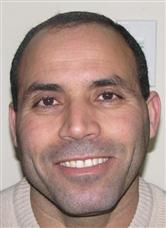
Suspected terrorist aided, financed group linked to al-Qaida: CSIS
Source: Macleans.ca
URL: Macleans.ca
Date: January 10, 2005
MONTREAL (CP) - A former literature student and karate instructor aided and financed a deadly al-Qaida splinter group, say newly released documents from Canada's spy agency.
The Canadian Security Intelligence Service says jailed Moroccan national Adil Charkaoui is a member of the Moroccan Islamic Combatant Group (MICG), which has been blamed for deadly attacks in Spain and Morocco. Charkaoui, a suspected sleeper agent for al-Qaida, has been held in detention since May 2003 on a national security certificate.
The spy agency's own information on Charkaoui's alleged links to the terrorist group have been kept secret for reasons of national security.
But the information in the Jan. 6 CSIS brief is based on Media reports from Morocco and France from last April that have been widely reported in the Canadian media.
"Moroccan authorities identified Adil Charkaoui as a member of the (MICG)," says the eight-page Federal Court brief, which cites an article in France's Le Monde newspaper.
The court document also cites a Moroccan newspaper as saying Charkaoui took military training in an al-Qaida camp in Afghanistan in 1998.
CSIS, quoting from the same newspaper, said the 31-year-old father of two sent $2,000 to the Moroccan-based group and provided one of its members with a laptop computer.
"The fact that Charkaoui offered financial assistance . . . introduces a new element as to the dangers posed by Charkaoui," said CSIS.
"He made himself available to a terrorist group."
The Moroccan newspaper article appeared in Aujourd'hui Le Maroc on April 16. Charkaoui was named by Nourdeine N'fia, an old emir with the group.
The newspaper report has outraged Charkaoui's family, which claimed torture was used to elicit information from N'fia.
The terrorist group has been linked to the March 11, 2004, train bombings in Madrid which killed 191 people and wounded more than 1,800.
It also has been connected with May 16, 2003, bombings in Casablanca, Morocco, which killed 33 bystanders and 12 suicide bombers.
Charkaoui has denied any terrorist links, and a polygraph expert testified Monday he believes Charkaoui told the truth when he denied in a lie detector test having any links to terrorists.
Charkaoui was making another attempt in Federal Court to get bail Monday.
He was also to testify for the first time, but decided against the move on Monday afternoon.
Charkaoui said in a statement the spy agency deliberately undermined his planned testimony by releasing 10-month-old news reports days before he was to take the stand.
"I am thoroughly disgusted by these games and demand a fair trial with full disclosure," he said.
"They have no case against me which would stand up to a fair trial."
But Justice Department lawyer Daniel defended the government's use of newspaper reports, saying it's a commonly used method of communicating information to the public without compromising security.
The government says Charkaoui knew terrorists and that his photo was recognized by prominent al-Qaida members, including jailed millennium bomber Ahmed Ressam.
But most of the evidence against Charkaoui has been kept a secret because the government says the information would compromise sources, spies and evidence-gathering methods.
His lawyers will try Tuesday to persuade Justice Simon Noel to reveal some of the classified evidence that has kept him behind bars.
Defence lawyer Dominique Larochelle expressed her client's frustration at having to defend himself against the classified evidence.
"If you want to understand Mr. Charkaoui's situation, read the document that was submitted (last week) and imagine how you can refute such information," she told reporters.
A final decision on whether to deport Charkaoui to his native Morocco still has to be made. Charkaoui has said he'll be killed if he's deported.
Under the security-certificate rules, the federal government can hold suspects - and eventually deport them - without disclosing the evidence it has against them. Suspects' lawyers are also denied a chance to cross-examine government representatives.
The Federal Court of Appeal recently upheld the constitutionality of the security certificate process, saying individual rights must sometimes be suspended to preserve national security and protect Canadians' safety.
Also on Monday, a polygraph expert testified he believes Charkaoui answered all questions truthfully during a Nov. 17 test.
Charkaoui was asked to respond to the federal government's allegations that he knew al-Qaida terrorists and trained with them in Afghanistan in the 1990s.
"It is my opinion that Mr. Charkaoui told the truth when he responded to questions pertinent to the inquiry," said John Galianos, a former Quebec provincial police officer.
But Roussy said the test result would have no effect on the government's position.
"He still represents a danger to the Canadian public and he's a threat," Roussy said outside the courtroom.
Copyright by Rogers Media Inc. May not be reprinted or republished without permission.