Aithor: Cairo Institute for Human Rights Studies (CIHRS)
Source: IFEX: The Global Network Defending and Promoting Free Expression
URL: Algeria: Spain forsakes international obligations in appalling refoulement of Algerian whistleblower
Date: March 29, 2022
Rights groups condemn Spain's deportation of Algerian activist Mohamed Benhalima who faces a high risk of torture, arbitrary detention and unfair trial in Algeria.
The undersigned organisations strongly condemn the deportation by Spain of Algerian activist Mohamed Benhalima, in the evening of 24 March 2022, despite the risks of torture and serious human rights violations he faces in Algeria, and therefore in blatant violation of Spain’s international obligations on non-refoulement. The authorities had been made aware, through civil society and legal appeals, that Mr Benhalima faces a high risk of torture, arbitrary detention and unfair trial in Algeria, where such violations are increasingly common against prisoners of opinion and peaceful activists.
Mohamed Benhalima is an Algerian citizen and a former army corporal, who became a whistleblower to expose corruption among Algeria’s high-ranking military officials in 2019. He left Algeria after receiving information that his name was on a list of wanted military officials at risk of detention by the Algerian army for their participation in the Hirak, a mass pro-democracy protest movement.
He sought asylum in Spain on 18 February 2020 and again on 18 March 2022 Spain refused him asylum both times. On 14 March 2022, authorities opened an administrative file of expulsion for infringement of Art. 54.1.a. of Immigration Law 4/2000, alleging that Mr. Benhalima took part in “activities contrary to public security or which may be harmful for Spanish relationships with foreign states”.
Spanish authorities justified the opening of an expulsion file based on Mr. Benhalima’s alleged association with political opposition group Rachad, which was listed as a terrorist group by Algeria on 6 February 2022 [1]. Spanish authorities claimed that Rachad’s objective was to infiltrate radical youth into Algerian society to protest against the Algerian government, and concluded that the activist was member of a terrorist group.
Spanish authorities did not provide any proof of use of violence, advocacy of hatred, or any other action taken by the activist that could be considered as “terrorism” in accordance with the definition proposed by the UN Special Rapporteur on the protection of human rights while countering terrorism [2]. Authorities also do not appear to have considered a context in which Algerian authorities have been increasingly levelling bogus terrorism and national security charges against peaceful activists, human rights defenders and journalists since April 2021. On 27 December 2021, UN Special Procedures warned [3] that the definition of terrorism in the Algerian Penal Code was too imprecise and undermined human rights. They stated that the procedure for registration on the national terrorist list did not comply with international human rights standards and expressed concern that it could give rise to abuse.
On 24 March around 7pm, Mr. Benhalima’s lawyers were notified of the resolution of expulsion and promptly filed a request for an interim suspensive measure at the National Court of Spain, which was rejected; however, it was revealed later that the activist was already being escorted on a plane to Algeria at the time.
On 21 March 2022, the UN High Commissioner for Refugees (UNHCR) submitted a non-public report to the Spanish government stating that Mr. Benhalima’s asylum request should be studied thoroughly in a regular procedure and not rejected expediently, arguing that the risk of torture was credible and that Algeria’s criminalisation of peaceful opposition was internationally recognised.
On 27 March, Benhalima appeared in a video broadcasted on Ennahar TV, in which he “confesses” to the crimes of conspiracy against the state and states that he was not treated badly in custody. However, the undersigned organisations call into question the reliability of such statements which might be the result of duress. In addition, Benhalima had himself released a video from the retention centre in Valencia, before his deportation to Algeria, in which he warns that such videos would not be genuine and would show that he “was subjected to severe torture at the hands of intelligence services.”
In January and March 2021, in Algeria, Mohamed Benhalima was sentenced in absentia to a total of 20 years in prison for charges including “participation in a terrorist group” (Article 87bis 3 of the Penal Code) and “publishing fake news undermining national unity” (Art.196 bis) among other charges. The overly broad formulation of both articles has been used by Algeria repeatedly to criminalise people who have expressed any form of dissent. In one of the two verdicts, issued on 9 March 2021, the judge sentenced Benhalima to 10 years in prison for his online publications, including videos exposing corruption in the army, a form of expression which is protected under the right to freedom of expression.
Spanish authorities additionally motivated the expulsion based on Mr. Benhalima’s close relationship with Mohamed Abdellah, another Algerian whistleblower and former member of the military, who also sought refuge in Spain in April 2019 and was forcibly returned on 21 August 2021 using Art. 54.1.a. of Law 4/2000, in similar circumstances and for the same motives.
Mohamed Abdellah, currently detained in the military prison of Blida, stated in court on 2 January 2022 that he had been subjected to torture and other ill-treatment upon his return to Algeria, including physical abuse and prolonged solitary confinement in a cell with no light, according to a witness who attended the hearing. He was also deprived of access to a lawyer.
Despite the strong similarities between both cases providing a compelling precedent about the actual risk of torture and other ill-treatment of activists and whistleblowers in Algeria, notably former members of the military, the Spanish government showed its determination to forcibly return someone where their physical and psychological integrity was not guaranteed. In doing so, Spain flouted critical international law obligations that forbid governments to return individuals to a country where they would be in danger of suffering torture or other cruel, inhuman or degrading treatment or punishment.
The government’s decision to expel Mr. Benhalima and the decision of the National Court not to apply a suspensive measure are in contravention of Article 3 of the UN Convention against Torture (CAT) ratified by Spain in 1987, which provides for an absolute protection against refoulement of persons in danger of being tortured or otherwise ill-treated in a State to which they are to be expelled, returned or extradited. According to the UN Committee against Torture, nobody can be excluded from this protection even if they are deemed to pose a threat to national security and are not eligible for asylum [4]. The Committee has shown that once a person alludes to a risk of torture, a State party can no longer cite domestic concerns as grounds for failing in this obligation [5], and that such considerations emphasise the importance of appropriate review mechanisms [6]. The Committee further explained that diplomatic assurances could not be used as a justification for failing to apply the principle of non-refoulement [7].
Similarly, Article 3 of the European Convention on Human Rights (ECHR) has been interpreted by the European Court on Human Rights as providing an effective means of protection against all forms of return to places where there are substantial grounds to believe that the person would be subjected to torture, or to inhuman or degrading treatment or punishment [8]. For the Court, this obligation prevails over any obligation to return, expel or extradite arising from other international or bilateral commitments [9]. Article 3 is further listed in Article 15(2) of the ECHR as a non-derogable provision, which leaves no scope for limitations under any circumstances, whether they be safety, public order or other grounds [10].
[1] Algerian Official Gazette, n°11 of 27 February 2022.
[2] Report of the Special Rapporteur on the promotion and protection of human rights and fundamental freedoms while countering terrorism, 22 December 2010, A/HRC/16/51 [link]
[3] OL DZA 12/2021.
[4] See example Human Rights Committee, Khan v Canada, N°15/1994 (n 1); VXN and HN v Sweden, N°130/1999 and 131/1999
(n° 49) para 14.3; Dadar v Canada, N° 258/2004, UN Doc CAT/C/35/D/258/2004, 23 November 2005,
paras 4.4, 8.8.
[5] UN Committee Against torture, Adel Tebourski v France, No 300/2006 (n°49) para 8.3.
[6] UN Committee Against Torture, Agiza v Sweden, N°233/2003, UN Doc CAT/C/34/D/233/2003, 20 May 2005, para 13.8
[7] UN Committee against torture, Abichou v Germany, N°430/2010, UN Doc CAT/C/50/D/430/2010, 21 May 2013, para 11.5
[8] UNHCR Manual on Refugee Protection and the ECHR Part 2.1 – Fact Sheet on Article 3.
[9] Ibid, para. 2.5.
[10] European Court of Human Rights, Ireland v. United Kingdom, Judgement of 18 January 1978, Series A, No. 25, para. 162 and 163.
Tunisia: Risk of refoulement of asylum seeker in cooperation with Algerian authorities would mark a dangerous turning point for human rights for Tunisia
Source: Frontline Defenders
URL: [link]
Date: November 16, 2022
Joint Statement - Tunisia: Risk of refoulement of asylum seeker in cooperation with Algerian authorities would mark a dangerous turning point for human rights for Tunisia
The undersigned organizations express their deep concern at the risk of refoulement of an Algerian asylum seeker - Zakaria Hannache - present in Tunisia since August 2022. Tunisian authorities must under no circumstances repeat the dangerous precedent set by the kidnapping and refoulement of Algerian refugee Slimane Bouhafs on 25 August, 2021, about which no investigation has been opened to date in Tunisia.
Mr. Zakaria Hannache is an Algerian human rights defender, who has been prosecuted in Algeria since February 2022 under spurious charges, including charges of “apology of terrorism” and “undermining national unity”, for which he faces up to 35 years in prison, solely for exercising his freedom of expression through his work publishing information and documenting the arrests of prisoners of conscience.
After spending several weeks in prison in Algeria and then being granted provisional release in March 2022, Mr. Hannache continued to be subject to significant intimidation and pressure in Algeria, following which he came to Tunisia, in August 2022. On 9 November, Mr. Hannache was informed that he was summoned to the court of Sidi M'hamed, in Algiers, for a hearing as part of his trial. The hearing was postponed indefinitely and could now be scheduled at any point.
Multiple international human rights organizations, as well as several United Nations Special Procedures, have highlighted the excessively vague nature of the Algerian Penal Code, threatening the right to a fair trial and the proper functioning of justice. Anti-terrorist legislation has notably been used arbitrarily and almost systematically since 2021 to target peaceful activists and journalists.
In a communication made public on 14 November, the United Nations Special Rapporteur on Human Rights Defenders expressed “serious concerns” about the arrest and detention of Mr. Hannache, as well as “the charges against him, which appear directly related to his work as a human rights defender”.
Our organizations recall that as an asylum seeker, Mr. Hannache is protected by the 1951 Geneva Convention, its 1967 Protocol and by the 1984 Convention against Torture, ratified by Tunisia, under which the authorities are required to protect him and not to return him under any conditions, in particular in view of the risk of arbitrary imprisonment and ill-treatment to which he is exposed in Algeria.
Consequently, our organizations demand that Tunisian authorities at the highest levels respect their international commitments with regards to the right to asylum and that they ensure that human rights defenders can carry out their legitimate activities without hindrance, regardless of their nationality, including in the context of their bilateral security cooperations.
SIGNATORY ORGANIZATIONS:
Action for Change and Democracy in Algeria (ACDA)
Algerian League for the Defense of Human Rights (LADDH)
Al Karama for Rights and Freedoms (Tunisia)
Amnesty International - Tunisia Section
Article 19
Association for the Defense of Individual Freedoms (ADLI-Tunisia)
Association for the Defense of Human Rights in Morocco (ASDHOM)
Association for the Promotion of the Right to Difference (ADD-Tunisia)
Association of Maghrebian Workers in France (ATMF)
Association of Moroccans in France (AMF)
Autonomous General Confederation of Administration Workers (CGATA-Algérie)
Beity Association (Tunisia)
CIVICUS: World Alliance for Citizen Participation
Collective for the Families of the Disappeared in Algeria (CFDA)
Collective of Lawyers for Change and Dignity (CACD-Algeria)
Committee for the Respect of Freedoms and Human Rights in Tunisia
Damj - Tunisian Association for Justice and Equality
Dancers Citizens South (Tunisia)
Euro Mediterranean Federation against Enforced Disappearances (FEMED)
Euromed Rights
Front Line Defenders
Hassan El Saadawi Foundation for Democracy and Equality (Tunisia)
IBTYKAR (Algeria)
Intersection Action for Rights and Freedom (Tunisia)
International Federation for Human Rights (FIDH), within the framework of the Observatory for the Protection of Human Rights Defenders
International Service for Human Rights (ISHR)
Lawyers without Borders (ASF)
Legal Agenda - Tunisia
Marsad Nissa (Tunisia)
Mawjoudin We Exist (Tunisia)
MENA Rights Group
Mnemty - Tunisian Association for the Support of Minorities
Nachaaz (Tunisia)
National Autonomous Union of Public Administration Professionals (SNAPAP-Algérie)
National Syndicate of Tunisian Journalists (SNJT)
Organization Against Torture in Tunisia (OCTT)
Psychologists of the World - Tunisia
Riposte Internationale (Algeria)
SOS Disappeared (Algeria)
Soumoud Coalition (Tunisia)
Taqallam for Freedom of Speech and Creativity (Tunisia)
Tawhida Ben Cheikh Group (Tunisia)
Tharwa N'Fadhma N'Soumeur (Algeria)
The Organization of Freedom Martyr Nabil Barakati: Memory and Loyalty (Tunisia)
Tunisian Association for Cultural Action (ATAC)
Tunisian Association for Positive Prevention
Tunisian Association for the Support of Minorities (ATSM)
Tunisian Association of Democratic Women (ATFD)
Tunisian Alliance for Dignity and Rehabilitation
Tunisian Federation for Citizenship of the Two Shores (FTCR)
Tunisian Forum for Economic and Social Rights (FTDES)
Tunisian League for Human Rights (LTDH)
Tunisian Network for Transitional Justice
Union of Tunisians for Citizen Action (UTAC)
World Organization Against Torture (OMCT), within the framework of the Observatory for the Protection of Human Rights Defenders
UPR: 15 NGOs express serious concerns over gross human rights abuses in Algeria
Source: North Africa Post
URL: [link]
Date: November 14, 2022
Fifteen NGOs have expressed serious concerns over the gross violations of human rights in Algeria and denounced the responsibility of the Algerian army in the deterioration of human rights in the Tindouf camps.
In a joint statement released this Monday at the end of a roundtable held at La Maison des Associations in Geneva, NGOS accredited to the Human Rights Council, human rights watchdogs, migration experts, and human rights defenders noted that at the end of Algeria’s Universal Periodic Review (UPR), they remain seriously concerned about the gross human rights violations in the country, including the right to freedom of expression, peaceful assembly, right of association and freedom of the press.
They also voiced concern over the non-compliance by the Algerian human rights council with the Paris Principles, human trafficking and systematic violations of migrants’ rights, all practices that were debated by the States during the UPR of Algeria, held on November 11, 2022.
Likewise, the signatories recalled the recommendations made during Algeria’s UPR, mainly the abrogation of the amendments it brought to its penal code in 2021, which contain a broad definition of terrorism and under which many peaceful dissidents are in jail on bogus terrorism charges; exprtessing in this connection concern over the reprisals suffered by the 250 prisoners of conscience accused of terrorism.
The UPR also urged Algeria to ratify some international instruments, such as the Convention for the Protection of All Persons from Enforced Disappearances, and the Optional Protocol to the Convention against torture.
Regarding the treatment reserved by Algeria to Sub-Saharan migrants, they expressed outrage at the mass expulsion of more than 17,000 migrants sub-Saharan, urging the government to end systematic expulsion practices of migrants and their abandoning at “point zero” in the desert.
The joint statement signatories also brought up the situation in the Tindouf Camps, denouncing the recruitment of child soldiers and stressing the need for the host country to cooperate with the Special Representative of the UN Secretary General for the fate of children in armed conflict.
They urged the Office of the High Commissioner for Human Rights (OHCHR) to set up rehabilitation programs for child soldiers in the Tindouf Camps and make them benefit from specific protection measures against their exploitation by terrorist groups operating in the Sahel and Sahara region.
They likewise denounced the devolution of military, administrative and judicial powers in the camps to the polisario front, noting the responsibility of the Algerian army in the increase of serious human rights violations in the Tindouf camps, and calling on the United Nations High Commissioner for Refugees (UNHCR) to ensure respect for the civilian nature of the Tindouf camps and ensuring the census of the population.
Click on the image above to watch a documentary video, an abridged version of the award winning documentary by Amar Wala "The Secret Trial 5". The original film has been edited to focus on one of the Five, Mohamed Harkat, who has now been threatened with deportation to Algeria for 20 years.
by Alice Summers
Source: World Socialist Web Site
URL: [link]
Date: June 13, 2022
A death sentence against Algerian whistle blower and activist Mohamed Benhalima was announced by an Algerian military court, only two months after Spain’s PSOE (Socialist Party)-Podemos government denied his asylum application and deported him. Benhalima was made aware that the death penalty had been handed down against him on May 8, although his lawyers report that the sentence was imposed in absentia, while Benhalima was still in Spain.
Benhalima, a former officer, fled Algeria for Spain in 2019, after learning that his name was on a list compiled by the Algerian authorities of servicemen wanted for their involvement with the Hirak movement. He had taken part in mass anti-government protests triggered in February 2019 by former President Abdelaziz Bouteflika’s announcement of his fifth presidential candidacy. While the demonstrations forced Bouteflika out of office in April of that year, the military regime he headed remains in power.
In Spain, Benhalima built a reputation on social media as an opponent of the Algerian military regime. He amassed more than 345,000 followers on his Twitter, Facebook and YouTube pages, where he posted videos exposing and denouncing corruption in the Algerian armed forces.
Benhalima’s deportation is a damning indictment of Spain’s nominally “progressive” PSOE-Podemos government. It is a blatant violation of international law, which forbids deporting individuals to a country where they risk suffering torture or other cruel, inhuman or degrading treatment or punishment. The PSOE and Podemos are sending an unmistakable signal that they will act brutally to avert any challenge from below to the existing social order.
According to Amnesty International, Benhalima entered Spain on September 1, 2019 on a Schengen Zone visa, applying for political asylum in February 2020. He was given a temporary residence permit, which he later renewed, making it valid until November 2021. However, in August 2021, he received summons to a police station in Bilbao, Spain. Fearing deportation back to Algeria, Benhalima fled to France, but was later arrested and sent back to Spain.
On March 14, 2022, Benhalima was detained by Spanish authorities. They filed an expulsion order against him for allegedly infringing Article 54.1.a of Spain’s immigration law, claiming that he participated in “activities contrary to public security or which may be harmful for Spanish relationships with foreign states.”
This was based on flimsy allegations that Benhalima is tied to the Algerian Islamist opposition group Rachad, which Algiers listed as a terrorist organisation last year. UN Special Procedures human rights experts stated in December 2021 that the definition of “terrorism” in the Algerian Penal Code was too imprecise and undermined human rights.
An Algerian court had already sentenced Benhalima in absentia in January and March 2021 to 20 years in prison, for charges of alleged “participation in a terrorist group” and “publishing fake news undermining national unity,” among other accusations.
Four days after Benhalima’s arrest in Spain, he applied for asylum a second time, while detained in an internment camp in Valencia. At 17:35 on March 24, he was then told his second application had been unsuccessful; just three minutes later he was notified of his expulsion. Two hours after that, Spanish authorities forced Benhalima aboard a plane back to Algeria, where he was detained on arrival.
Benhalima appeared in a clip on Ennahar TV on March 27, in which he appears to “confess” to having conspired against the state and says he had not been ill-treated in custody. Just two days before his deportation from Spain, Benhalima had warned that he would likely be forced to make a false confession if detained by the Algerian regime, most likely be because he had been “subjected to severe torture at the hands of intelligence services.”
On March 21, 2022, the UN High Commissioner for Refugees (UNHCR) had written to the Spanish government calling for Benhalima’s case not to be expedited, arguing that the risk of torture was credible, and that the Algerian regime’s criminalisation of political opposition is well known.
In March, while detained in Valencia, Benhalima had told Spanish media outlet Levante EMV: “If I return to Algeria, they’re going to violate my human rights. Prison and torture are waiting for me. First, I will have a trial for having revealed corruption in my country … Then I fear that they will torture me in a military prison, that I’ll suffer sexual violence, or even that they’ll kill me and then say that I caught coronavirus.”
Benhalima is the second Algerian whistle blower to be deported from Spain and then imprisoned in Algeria in under a year. Last August, former border patrol officer Mohamed Abdellah—who sought asylum in Spain after exposing alleged corruption, bribery, fraud, and cross-border arms and petrol smuggling by high-ranking officers of the Algerian Gendarmerie—was forcibly returned to Algeria by the PSOE-Podemos government.
On his arrival in Algeria, Abdellah was handed to the intelligence service and taken to the Antar barracks in Algiers, notorious as an interrogation and torture site. As of January this year, Abdellah was being held in isolation at the Blida military prison, awaiting trial for undermining state security and the reputation of the army. Since then, there has been little information on his whereabouts.
The PSOE-Podemos government’s decision to deport Benhalima has been widely acknowledged in the bourgeois media as a goodwill gesture to the Algerian dictatorship. Algerian–Spanish relations have been tense since PSOE Prime Minister Pedro Sánchez recognised Morocco’s claim to the Western Sahara in mid-March.
The Western Sahara is a sparsely inhabited former Spanish colonial possession on Morocco’s south-western border, with considerable mineral and phosphate deposits, which Rabat has long sought to bring under its administration as an “autonomous region.”
After Spain ended its long-standing stance of neutrality in this dispute, Algeria, which has backed the pro–Sahrawi independence Polisario Front, withdrew its ambassador from Madrid. Just five days later, the PSOE and Podemos expelled Benhalima from Spain, in an apparent attempt to curry favour with Algeria, which provided more than 40 percent of Spain’s natural gas imports in 2021. This comes as the European Union and NATO campaign for an energy embargo against Russia, the EU’s major oil and gas supplier, amid the war in Ukraine.
The treatment of Benhalima and Abdellah gives the lie to claims by the PSOE-Podemos government, as part of the NATO alliance, to be defending “democracy” and “human rights” in Ukraine against Vladimir Putin’s Russia. The Spanish government has no problem violating the rights of asylum seekers and tacitly condoning the arbitrary detention, torture and murder of political prisoners.
The PSOE and Podemos already have the blood of thousands of refugees on their hands. By blocking off “legal” routes to enter Spain, they forced desperate migrants to make perilous boat journeys across the Mediterranean to mainland Spain or the Atlantic to the Canary Islands, leading to thousands of deaths at sea. Taking its cue from the far-right Vox party, it built prison camps on the Canary Islands, separated children from their parents, and summarily deported thousands of asylum seekers without even examining their cases.
By deporting Benhalima, the PSOE and Podemos aim to terrorize workers and youth in Algeria opposed to the regime. They aim not only to block renewed eruptions of class struggle threatening the existing regime in Algeria, which is complicit in their anti-refugee policies. After Podemos and the PSOE have deployed tens of thousands of heavily armed police against strikes by metal workers and truckers over the last year in Spain itself, it is apparent that the target of this escalation of police-state terror is the entire working class.
by Eric Goldstein
Source: Human Rights Watch
URL: [link]
Date: May 26, 2022
Efforts to Crush Domestic Protests Reaches Algerians Abroad
Compared to the most brazen practitioners of pursuing political opponents abroad – Saudi Arabia, for example, dismembering journalist Jamal Khashoggi – Algeria has garnered little attention.
But activists within Algeria’s diaspora are fearful, after several cases that seem to complement government efforts to crush the three-year-old peaceful protest movement known as the “Hirak.”
On March 24, Spain issued an expulsion order against former army corporal Mohamed Benhalima and flew him the same day to Algeria, which had reportedly issued an international arrest warrant for him. Benhalima had fled to Spain in 2019 fearing reprisals, he said, after participating in Hirak street protests. In Europe, Benhalima maintained a YouTube channel denouncing military officials.
Spain twice rejected Benhalima’s asylum application before sending him to Algeria, despite the UN Refugee Agency’s urging Spain to take into account the credible risk of torture and Algeria’s criminalization of peaceful opposition. Benhalima’s lawyer in Spain has appealed his expulsion.
After getting him back, Algerian authorities promptly jailed Benhalima and tried him for publishing “false information” that harms “territorial integrity” – charges that authorities have used to imprison many of the hundreds of Hirak activists currently or formerly imprisoned.
A court had already sentenced Benhalima to 10 years in prison in absentia for these offenses. Another court reportedly sentenced him to death in absentia, for espionage and desertion.
Slimane Bouhafs had been a UN-recognized refugee in Tunisia. He had left Algeria after serving 18 months of a prison term for “insulting Islam.” Bouhafs, a convert to Christianity, advocates for the rights of Algeria’s Kabyle (Berber) population. On August 25, 2021, witnesses reported seeing men in plainclothes abduct him from his home in Tunis. Four days later he surfaced in police custody in Algiers.
Neither Tunisian nor Algerian authorities have claimed responsibility for Bouhafs’ transfer to Algeria. A promise by Tunisian President Kais Saied to investigate the case went nowhere. Algerian authorities, meanwhile, claim that they arrested him inside Algeria. Bouhafs is in jail, awaiting trial on terrorism-related charges.
Algeria in 2021 broadened the definition of terrorism in penal code article 87bis to include “attempting to gain power or change the system of government through non-constitutional means,” an expansive definition authorities use to prosecute nonviolent opponents, most recently the pro-Hirak journalist Ihsane El Kadi.
This year, at least three Algerian-Canadian binationals were arbitrarily prevented from flying back to Canada and interrogated about their Hirak links. Two of the three were allowed to depart, three months after their initial attempts.
The message is clear: Algerians who speak out need to look out, no matter where they live.
by: Press Release
Source: Amnesty International
URL: [link]
Date: March 15, 2022
Responding to the news that the Spanish authorities are planning to deport Mohamed Benhlima, an Algerian asylum-seeker, whistleblower and anti-corruption activist, Amna Guellali, Amnesty International’s Deputy Regional Director for the Middle East and North Africa, said:
“The Spanish authorities are deeply aware of the grim fate that awaits Mohamed Benhlima if they deport him. Over the last two years, the Algerian authorities have stepped up their brazen prosecution of activists as they seek to crush all forms of dissent.
“The international community has a moral responsibility to stand up for those who expose human rights violations and raise their voice against corruption. Spain must immediately quash its plans to deport Mohamed Benhlima and respect the principle of non-refoulement.
“Under international law, nobody should be returned to a country where they would be in danger of suffering torture or other cruel, inhuman or degrading treatment. Deporting Mohamed Benhlima would represent a serious violation of Spain’s obligations under international human rights law.”
Background
Mohamed Benhlima is an Algerian citizen and a former military official turned whistleblower who exposed corruption among Algeria’s high-ranking military officials in 2019.
He fled to Spain in September 2019 after being informed that his name was on a list of wanted military officials after he participated in the Hirak protest movement. He has since sought asylum in both Spain and France.
On 7 January 2021, he was sentenced in absentia to 10 years in prison for sharing videos online that exposed corruption within the military.
Amnesty International has documented the use of torture and other ill-treatment by Algerian security forces in at least four cases of activists arrested over the past three years for their participation in the Hirak.
In a similar case, Spanish authorities extradited on 20 August 2021 former military official and asylum-seeker Mohmed Abdellah, who had sought refuge in Spain in November 2018 after he had publicly accused the Algerian military of corruption. Upon his extradition to Algeria, Mohmed Abdellah was taken directly to the “Antar” high security centre in Algiers. He remains in detention to date. During a court hearing on 2 January 2022, he publicly stated that he was subject to torture and ill-treatment in detention.
by Raymond Bonner
Source: Pro Publica
URL: [link]
Date: October 7, 2021
Thirteen years ago, suspected terrorist Abu Zubaydah filed a petition challenging the legality of his detention. In a Supreme Court hearing about state secrets, justices asked why federal courts have declined to rule on the case.
The Supreme Court on Wednesday waded into the case of Abu Zubaydah, a terrorism suspect whose request that the U.S. release him from Guantanamo Bay or charge him with a crime has languished without action for more than 13 years.
The court was hearing a case on another issue: Whether the U.S. government could cite “state secrets” to prevent Zubaydah’s lawyers from taking depositions from the CIA contractors who subjected Zubaydah to waterboarding and other methods of torture.
But several justices appeared baffled by a question ProPublica raised more than six years ago: Why have the federal courts declined to rule on the petition Zubaydah filed back in July 2008 challenging the legality of his detention?
The Supreme Court ruled in June of 2008 that Guantanamo detainees had a right to file what is known as a habeas corpus petition — the phrase is Latin for “you have the body.” Habeas actions require the government to go before a judge and either release the person it is holding or bring charges. Zubaydah’s lawyers have been trying without success to elicit a ruling ever since.
In their questions at Wednesday's oral arguments, the justices appeared unaware that Zubaydah’s plea for release has yet to be heard.
“Have you filed a habeas or something, get him out?” Chief Justice John Roberts wanted to know.
Yes, 14 years ago, replied Daniel F. Klein, Zubaydah’s lawyer.
That answer seemed to confound several of the justices.
“They don’t decide?” Justice Stephen Breyer asked. “You just let him sit there?”
“I don’t understand why he is still there after 14 years,” Breyer said later to the government counsel, Brian H. Fletcher.
Zubaydah’s lawyers filed a habeas action in 2008 — a month after the Supreme Court ruling that granted Guantanamo detainees that right — in federal court in Washington, D.C., and it was assigned to Judge Richard W. Roberts. Roberts made no substantive rulings in the years that followed and had failed to rule on any of the 16 motions by Zubaydah’s lawyers when he left the bench in 2016. The case was then assigned to Judge Emmet Sullivan, who has yet to rule on the petition.
The right of a detained person to file a habeas petition seeking release dates back to the Magna Carta, and the Supreme Court has said in other cases that it is meant to be a “swift and imperative remedy.”
Frustrated by the inaction in the case, Zubaydah’s lawyers filed what is known as a writ of mandamus with the federal appeals court in 2019 asking that the higher court order Sullivan to rule. It was a highly unusual move, as lawyers do not like to antagonize judges hearing their cases.
The appeals court denied the motion, but there has since been some movement in the case. Sullivan has issued a discovery order, requiring the CIA to turn over some documents to Zubaydah’s lawyers. Among them were Zubaydah’s medical records, which his lawyers have been seeking since 2009.
The documents that the CIA turned over were heavily redacted, and the agency has said that it will take as long as six years to complete its review of what can be made public.
Zubaydah, now 50 years old, has been in American custody since 2002, first held, and tortured, by the CIA interrogators at so-called black sites in Thailand and Poland, before being sent to Guantanamo, where he has been held since 2003. Those facts are not in dispute and have been described in a Senate report. Poland’s former president has acknowledged his country’s role in holding Zubaydah.
The case before the justices on Wednesday arose as a result of an ongoing Polish investigation into whether the country’s officials were complicit in the mistreatment of Zubaydah.
Zubaydah’s lawyers said they were prepared to assist that inquiry by taking depositions from James Mitchell and Bruce Jessen, the two psychologists who questioned Zubaydah while he was at the black site in Poland. Both were CIA contractors.
The Trump administration moved to bar any questioning of Mitchell and Jessen, saying official confirmation of where he was held would reveal a state secret.
Strikingly, justices frequently used the word “torture” to describe what happened to Zubaydah in Poland and at a black site in Thailand, rather than the euphemism preferred at the time by the Bush administration, “enhanced interrogation techniques.”
“The fact that he was tortured by these [CIA] contractors in Poland, that’s not a state secret?” Justice Amy Coney Barrett asked Zubaydah’s lawyer at one point. She used the word “torture” several times in her questioning of both sides.
Justice Neil Gorsuch asked whether the government could avoid confirming any secrets if Zubaydah himself testified about how he was treated. This would sidestep the official confirmation that would arise from allowing the CIA contractors to describe what they had done.
Fletcher repeatedly refused to say whether the Biden administration would permit Zubaydah to give sworn testimony for use in the Polish case, prompting a pointed question from Gorsuch.
“I’d just really appreciate a straight answer to this. Will the government make Petitioner [Zubaydah] available to testify as to his treatment during these dates [when he was held in Poland]?” Gorsuch asked the government.
Fletcher said he couldn’t answer that.
Gorsuch wasn’t happy. “This case has been litigated for years and all the way up to the United States Supreme Court, and you haven’t considered whether that’s an off-ramp that — that the government could provide that would obviate the need for any of this?”
After a further dodge by the government lawyer, Gorsuch said again, “I personally would like a straight answer to that question.”
Justice Sonia Sotomayor joined, “We want a clear answer, are you going to permit him to testify as to what happened to him those dates without invoking a state secret or other privilege? Yes, no. That’s all we’re looking for.”
Raymond Bonner is a regular contributor to ProPublica. He is producing a documentary with Alex Gibney about Abu Zubaydah and the CIA’s interrogation program called “The Forever Prisoner,” which is scheduled for release in December.
Algerian police said Monday that they had arrested 27 people suspected of belonging to a separatist group that Algiers considers a "terrorist" organization.
The individuals were arrested over the previous 48 hours in a case involving "undermining national unity, harming public order and inciting a gathering", on suspicion of belonging to the Movement for the Autonomy of Kabylie (MAK), authorities said in a statement.
It said 25 people were arrested in Kherrata, which last week saw clashes between protesters and police after a march in support of prisoners of conscience was banned.
AFP quoted the statement as saying that security forces were wounded during the clashes in the town, which is located in the traditionally restive northeastern Kabylie region.
Two other people were arrested in an area around 60 kilometers away, according to the statement.
Items including "military clothing, bladed weapons" and MAK material were found in the individuals' homes, it added.
The suspects were trying to "sow strife and fear among citizens and re-activate sleeper cells of this terrorist organization, on the order of foreign parties", the statement said.
Algeria's Human Rights League (LADDH) on Sunday had called for the release of more than 20 people who it said had been arrested.
Separately, the LADDH said that authorities had arrested "journalist and human rights defender Hassan Bouras" on Monday and searched his home in northwestern El Bayadh.
It said it did not know the reason for Bouras's arrest.
Bouras, who is also a LADDH member, had been sentenced to a year in prison in 2016 for "insulting a judge, a public forces member and a government body".
Rights group Amnesty International at the time called Bouras a "prisoner of conscience" and said he had been sentenced "for a video denouncing corruption of local officials in the city of El Bayadh".
According to prisoners' rights group CNLD, around 200 people are in jail in connection with the Hirak pro-democracy protest movement that has shaken the country sporadically since 2019, or over individual freedoms.
by Subhah Wadhawan
Source: Sage Journals
URL: [link]
Abstract
Racialization, surveillance, and securitization may be distinct theoretical concepts, but they are nevertheless significantly intertwined. Race, as a mode of thinking and governance, largely informs the practices of securitization, whereby surveilling racialized bodies is an immanent task of the securitization process. To demonstrate this relationship, I interviewed three of the men from the infamous Canadian “Secret Trial 5” Security Certificate cases and their family members. I investigate their lived experiences of home imprisonment, examining how their home became a key site for the operation and deployment of racialized surveillance. Their experiences illustrate how surveillance emerges as a practice of securitization, where racialized “Others” are reaffirmed as threats to and subjects of unfettered surveillance practices. As the only research endeavor to interview Canada’s security certificate detainees and their families, this article demonstrates how securitization materializes through the transformation of the home into a prison; this is achieved through the imposition of carceral practices and a penal architecture within the home and through eroding belonging and safety for the people living under this type of regime. Moreover, given that most studies focusing on the experiences of securitization are restricted to the experiences of the incarcerated individuals, these studies often exclude, and by extension, silence the voices of the families also touched by these processes. Thus, this article illuminates that, albeit, in different magnitudes, families also undergo the pains of imprisonment.
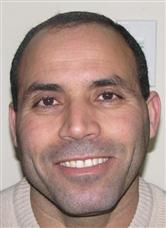
Click on the photo of Mohamed to see all items related to him. JUNE 2017: Mohamed Harkat once again faces deportation to his native Algeria after the Supreme Court of Canada declared the federal government’s security certificate regime constitutional.
This fight is not over. The Justice for Mohamed Harkat Committee will re-double its efforts to see that justice is done for Mohamed Harkat and that the odious security certificate system of injustice is abolished once and for all.