by Euro Med Monitor
Source: Scoop World
URL: [link]
Date: June 27, 2021
Geneva - The Euro-Mediterranean Human Rights Monitor called on the governments of Arab countries to stop all forms of torture against prisoners and detainees, stressing that most governments and conflicting parties in the Middle East and North Africa, especially the Syrian regime, use torture as a systematic policy inside prisons and detention centers.
Most governments in the Arab region widely practice torture, amid near absence of effective accountability and oversight mechanisms, and they sometimes cover up these illegal practices, said the Geneva-based Euro-Med Monitor in a report issued on Saturday morning on the International Day in Support of Victims of Torture.
The Euro-Med Monitor report, entitled “I can’t bear it anymore” highlighted the methods and forms of torture in the Arab region, based on 32 testimonies of former detainees and families of current detainees in several countries where torture practices were documented.
Based on 32 testimonies of former detainees and families of current detainees, the Euro-Med Monitor report, entitled “I Can’t take it anymore”, highlighted the methods and forms of torture practiced in different countries of the Arab region.
It documented torture practices in nine Middle Eastern countries; Iraq, Syria, Bahrain, Lebanon, Saudi Arabia, Jordan, the UAE, Israel and the Palestinian territories, in addition to five others in North Africa; Egypt, Tunisia, Algeria, Morocco and Sudan.
Some countries that suffer from internal conflicts, such as Syria, witness widespread torture practices among all parties to the conflict with each taking their part in responsibility.
Torture practices are common in countries that witness internal conflicts, such as Syria, said the report, adding that conflicting parties are all disproportionately responsible.
Euro-Med Monitor pointed out that impunity for torture perpetrators is a huge challenge. Although most Arab countries have agreed to international standards for investigation, prosecution and accountability of torture and ill-treatment, the number of torture prosecutions in the region does not reflect the actual number of torture cases, since investigations related to torture cases are mostly sham, and therefore their results are ultimately ineffective because most of these violations were committed under the cover of the ruling authority.
There are different methods of torture, including physical torture; such as beating, slapping, kicking, suspension, electrocution, and waterboarding, sexual torture; such as rape, rape threats and sexual insults, and psychological torture; such as deprivation of sleep or solitary confinement for long hours.
Nine out of ten allegations of torture and ill-treatment that were formally submitted to governments around the world are ignored, with some countries not even responding in a manner that allows effective prevention or investigation of the violation in question, said Nils Melzer, the Special Rapporteur on torture and other cruel, inhuman or degrading treatment.
According to a report by the Syrian Network for Human Rights, Syria recorded the highest number of torture victims from March 2011 to June 2021, with at least 14,537 people, including 180 children and 92 women, killed due to torture practiced by the conflicting parties. 14,338 people were killed only by the Syrian regime forces.
“Most Arab countries prohibit torture in theory, but it is a cornerstone of their repressive system and is used frequently against their political opponents or human rights defenders,” said Anas Jerjawi, Euro-Med Monitor’s Chief Operations Officer.
“International policies towards torture perpetrators should be more stringent. This includes imposing sanctions on countries involved in torture practices, and activating the UN’s oversight mechanisms in prisons and detention centers in said countries.” Jerjawi added.
Euro-Med Monitor report recommended that countries and conflicting parties in the Arab region stop all forms of torture against detainees and prisoners, and train officials to apply international standards in prisons and detention centers.
The Euro-Mediterranean Human Rights Monitor urged the concerned parties to stop providing immunity for perpetrators of torture, especially to investigation officers, or individuals affiliated with the armed forces in general or in conflict zones under the pretext that it is an emergency, terrorism, or matters that threatens national security. It called them on to investigate all complaints of torture to limit it, thus putting an end to it.
It also called on Arab countries to take all measures necessary to amend or adopt new national legislation that includes clear criminalization of torture, in line with the definition of torture included in Article 1 of the Convention against Torture.
Source: The North Africa Post
URL: [link]
Date: June 21, 2021
Morocco and the US ended the 2021 African Lion drills on June 17 with tactical exercises using live ammunition to improve interoperability of the participating armies near Tan Tan.
The last segment of the African Lion drills focused on honing the combat preparedness and responsiveness of Moroccan and US artilleries.
A key part of the closing of the exercise featured the deployment in the air of the U.S. Air Force F-16C Fighting Falcon aircraft from the 31st Fighter Wing and KC-135 Stratotanker aircraft which flew alongside Moroccan F-16s demonstrating partnership and capability to execute combined operations.
“The arrival of fighters and tankers adds another level to this already dynamic exercise,” said Gen. Jeff Harrigian, U.S. Air Forces in Europe-Air Forces Africa commander. “Every flight brings another opportunity to work closely with our partners and exchange best practices so we can better pursue our shared goals.”
Both air forces trained on refueling missions for the F-16Cs in a simulation of combat environment in Guelmim.
Pilots, enabled by Moroccan logistics and sustainment teams, flew the aircraft through a close air support training range before flying to Guelmim Airfield to practice the delivery of weapons and air support, delivering seven 500lb laser-guided weapons.
The maritime portion of the exercise, led by U.S. Naval Forces Africa, includes a naval gunfire exercise, multiple sea-based maneuvers, and crisis response capabilities.
More than 7,000 participants from nine nations and NATO train together with a focus on enhancing readiness for U.S. and partner nation forces. AL21 is a multi-domain, multi-component, and multi-national exercise, which employs a full array of mission capabilities with the goal of strengthening interoperability among participants.
Besides Morocco and the US, The African Lion brings together armies of allied countries such as the UK, Canada, Brazil, Tunisia, Senegal, the Netherlands and Italy, as well as the Atlantic Alliance. Military observers from some 30 countries representing Africa, Europe and America attend the exercise, which is the largest in Africa.
This year’s drills were held in multiple locations in Morocco, including in Mahbes, about 40 kilometers from the rear base of the Algeria-based Polisario separatist militias. Mahbes was also the scene of a paratrooper deployment in an exercise that tests rapid reaction and mobilization.
The drills also cover combatting violent terrorist organizations as well as land, airborne, air, maritime and nuclear, radiological, biological and chemical decontamination exercises.
by The New Arab Staff and Agencies
Source: The New Arab
URL: [link]
Date: June 21, 2021
Algerian human rights activist Fatiha Briki has been detained with official reason given for her arrest, according to her family and a prisoners' rights group.
Algerian human rights activist Fatiha Briki has been detained by authorities and no official reason has been given for her arrest, her family and a prisoners' rights group said Monday.
Briki, a retired university teacher and a member of prisoners' rights group CNLD, was arrested on Thursday and her home searched, according to the CNLD.
"I believe that her work on behalf of detainees is the root cause for her arrest," Said Salhi, vice-president of the Algerian League for the Defence of Human Rights (LADDH), said.
Authorities have not commented on the arrest of Briki, who is also a member of an anti-torture association.
Her family called for her "immediate release" in a statement, and said they tried but were prevented from visiting her on Sunday at her place of detention.
"Fatiha is well both physically and psychologically. Her place is not in prison," the statement added.
Briki took part in the weekly anti-government protests organised by the Hirak movement, until such rallies were banned by the interior ministry ahead of the June 12 parliamentary election.
The vote, which was won by Algeria's long-dominant National Liberation Front, was boycotted by the Hirak and saw a record low turnout of 23 percent.
Ahead of the election, authorities had arrested a string of opposition figures, activists, journalists and lawyers, although some were quickly released with no reason given for their detention.
At least 260 people connected to the protest movement or other organisations pressing for more rights are currently in detention in Algeria, according to the CNLD.
by Jasper Hamann
Source: Morocco World News
URL: [link]
Date: June 12, 2021
Upcoming changes in the Algerian penal code will allow its regime to charge journalists and critics as terrorists.
Rabat - Algeria is expanding its Terrorism Act to the extent that it will be able to prosecute its critics and journalists on terrorism charges. An update was published on June 10 that indicates that Algeria’s unpopular regime is broadening the definition of terrorism to include charges commonly levied against journalists, anti-establishment protesters, and even online critics.
Ahead of a weekend of legislative elections, the move appears to constitute another increase in repressive measures by Algeria's ruling elite in the face of domestic opposition and calls for structural reform.
The revisions to the penal code were initiated by the country’s embattled leadership and was discussed and adopted in one session of the country’s Council of Ministers on May 30. Officials in Algiers have indicated that the revised penal code intends to strengthen efforts to combat terrorism, by estbalishing a list of “terrorist people and organizations.”
How the upcoming terrorist “black list”would help combat terrorism, few could explain.
A closer examination of the changes made to the penal code reveals a broad expansion of what the state considers terrorism. While the broadening of the term is indeed likely to lead to increased arrests on terrorism charges, the penal code revisions have no provisions that would actually arrest more extremists.
Instead, the new penal code now considers "any act aimed at the security of the state, national unity and the stability and normal functioning of institutions,” as a terrorist act.
This expansion is likely to concern journalist, Hirak protesters and government critics, as the terms defined as “terrorism” are the exact charges commonly used to arrest whomever the regime considers to be a critic.
The new penal code furthermore acts as an active deterrent to political change in Algeria. Algiers will now consider any action “to work or incite, by any means whatsoever, to gain power or to change the system of governance by non-constitutional means" as an act of terrorism.
The vast broadening of Algeria’s penal code is likely to result in its new “black list” being leveraged as a tool to scare critics and reporters into silence, in fear of being listed as a terrorist. Furthermore it will allow the regular prosecution of the country’s journalists to now be done under the guise of “combatting terrorism.”
Several of the charges described as terrorist acts have before been used to silence and imprison government critics, from established journalists such as Khaled Drareni (who was arrested again this week) to every-day citizens voicing their frustrations on social media.
Source: The Tennessee Tribune/Zenger News
URL: [link]
Date: March 16, 2021
A call by the United Nations for Algeria’s government to investigate allegations of human rights abuses, including torture, arbitrary arrest and sexual assault, has so far gone unanswered.
The Office of the United Nations High Commissioner for Human Rights on March 5 urged Algeria to launch “a quick, impartial and rigorous investigation” into allegations of severe human rights abuses against pro-democracy demonstrators.
Rupert Colville, spokesperson for the office of the high commissioner, said there were “credible reports” of torture by security forces, and that the United Nations was very concerned about deteriorating conditions in the country.
Thousands of Algerians have been taking part in demonstrations, known as Hirak, calling for a change in government and an end to the military’s control of political affairs. The demonstrations, which began in February 2019, resumed earlier this year after a hiatus due to Covid-19 restrictions.
“We are deeply concerned about the deteriorating human rights situation in Algeria and the continued and growing repression of members of the pro-democracy Hirak movement,” Colville said.
He said hundreds of demonstrators have been prosecuted and at least 32 are currently detained. Some detainees were also arrested for posting messages on social media that criticized the government. Some have received long prison sentences for their part in pro-democracy activities.
PHOTO: A student protester who was beaten by police during a peaceful demonstration in March 2020 in Algiers.
The OHCHR said it was calling for an end to the violent repression, arrests and detentions. It also requested that Algeria give “immediate and unconditional release” to pro-democracy demonstrators and drop all charges against them.
Support for Algeria’s pro-democracy movement has come from the Algerian diaspora in France and Canada. Many in the diaspora have filed complaints and cases with the United Nations, denouncing the torture and human rights violations.
PHOTO: This image of Walid Nekkiche includes a statement about his claims of torture while in detention.
Among the cases brought to the attention of the OHCHR is that of Walid Nekkiche, a 25-year-old student who was allegedly raped with a broomstick by security forces while in custody. Nekkiche was released after charges of conspiracy against the state were dropped.
Another case before the OHCHR is that of activist Sami Darnouni, who has been in custody since December 2020. He was sentenced on March 2 to two years in prison on charges of undermining national security and incitement.
His lawyers deny the charges and say that Darnouni was “forced to confess under torture” during his interrogation at the Antar barracks. They said he was stripped, beaten and tortured with electric rods at the barracks in Ben Aknoun in Algiers, where he was transported after his arrest in Tipaza in northwest Algiers.
“The accusations against him are completely false and unjust,” said his lawyer, Haboul Abdellah. “There is no evidence of Mr. Darnouni’s involvement in any crime.”
When Darnouni’s trial began on Feb. 26, the prosecutor’s office of the Court of Tipaza requested that he be given a 10-year prison sentence.
The OHCHR has highlighted Darnouni’s case and that of at least 2,500 others who were arrested or detained during peaceful demonstrations as evidence of the use of excessive force by Algerian security forces.
Criminal proceedings initiated in 2019 and 2020 are continuing against activists, human rights defenders, students, journalists, bloggers and other citizens, the United Nations agency said.
The agency wants Algerian authorities to repeal the country’s laws under which protesters can be prosecuted for expressing negative opinions about the government or assembling peacefully to protest.
Meanwhile, harsh repression of Hirak demonstrations continues, with reports of elderly Algerians being beaten and of a 7-year-old child being picked up by police in the past week.
(Edited by Jewel Carmella Fraser and Judith Isacoff)
Source: The North Africa Post URL: [link] Date: March 8, 2021
The United Nations High Commissioner for Human Rights has officially called on the Algerian authorities to conduct “prompt and impartial investigations” into the allegations of torture and sexual abuse suffered by several inmates arrested during the Hirak who openly denounced the ill-treatment inflicted on them by the security services while in police custody.
Rupert Colville, Spokesman for the United Nations High Commissioner for Human Rights, officially called on the Algerian authorities to “prompt and impartial investigations” into the allegations of torture and sexual abuse made by several detainees in the country. Hirak who openly denounced the ill-treatment inflicted by the security services while in police custody.
In a statement posted Friday on the website of the UN High Commissioner for Human Rights, Spokesman Rupert Colville said the UN body has instructed the Algerian regime to “conduct rapid, impartial and effective investigations into all allegations of torture and ill-treatment in detention.”
Rupert Colville also demanded that the Algerian authorities “hold to account all those responsible” for these infamous practices of torture “and to ensure that the victims have access to reparations.”
“We urge the authorities to repeal the legal provisions and policies used to prosecute people who exercise their rights to freedom of opinion and expression and peaceful assembly,” said Rupert Colville.
The UN High Commissioner for Human Rights also brought up the issue of prisoners of conscience. The UN body called for the release of all those imprisoned for their political opinions and activities in favor of Hirak.
“We urge the authorities to immediately and unconditionally release all those arbitrarily arrested or detained for allegedly supporting the Hirak and to drop all charges against them,” Rupert Colville stated.
The UN body also denounced the resort to excessive force by Algerian security forces to suppress the peaceful demonstrations.
“There have been numerous instances across the country where security forces have used unnecessary or excessive force and arbitrary arrests to suppress peaceful demonstrations,” UN human rights spokesman Rupert Colville said.
“These developments echoed what happened earlier in 2019 and 2020, during which a total of at least 2,500 people were arrested or detained in connection with their peaceful activism,” he said.
“Similarly, the criminal prosecution in 2019 and 2020 of activists, human rights defenders, students, journalists, bloggers and ordinary citizens expressing dissent continued during the first two months of this year,” he added.
Since mid-February, thousands of Algerians have defied Covid-19 restrictions and took to the streets of Algiers and other cities across the country to commemorate the second anniversary of the Hirak movement and renew their demands for the end of the military junta rule and the establishment of a civilian democratic state.
Groups call for detainees to be freed from Laval facility amid COVID-19 outbreak
posted on February 24, 2021 | in Category Canada | PermaLink
by Pierre Sainte-Arnaud Source: Presse Canadienne URL: [link] Date: February 24, 2021
Several community groups are calling on Ottawa to free those who are being kept at an immigration detention centre in Laval after a COVID-19 outbreak at the facility.
According to information obtained by Solidarité sans frontières, several detainees are on hunger strike to protest poor standards of hygiene at the Centre de surveillance de l’immigration de Laval, saying they are at great risk.
At least five cases of COVID-19 were recorded among the detainees, but 12 to 15 people are in isolation at the facility. Visits have been cancelled since last March — a situation that severely limits their access to legal support and aggravates their isolation, the groups say.
According to accounts from detainees, they are being held in cramped quarters that are badly maintained and there is lots of dust in the air, which causes some to have breathing difficulty and irritations. The detainees say they are not even able to wash their clothes.
Those being held at the CSI Laval are awaiting deportation, are undocumented immigrants or entered Canada in an irregular manner, so they are considered to be flight risks.
However, the groups say their detention is both cruel and dangerous during the pandemic.
Source: The North Africa Post
Date: February 14, 2021
Algerian NGOs have announced Saturday in Algiers the setting up of a committee to fight torture and violence suffered by prisoners of conscience, after accusations of rape shocked the public opinion.
The testimony in early February of Walid Nekiche, a 25-year-old pro-democracy activist, who claims to have been tortured and sexually assaulted by members of the security services, triggered indignation and forced the general prosecutor of the Court of Algiers to open an investigation.
In reaction, several associations decided to set up a “Committee to fight torture and inhuman prison conditions of detainees in Algeria”, so that “justice is rendered.”
The new body brings together the National Committee for the Liberation of Detainees (CNLD), the National Coordination of Algerian Academics for Change and the Collective of lawyers for the defense of prisoners of conscience.
“By revealing in front of magistrates the abuse he was subjected to, Walid Nekkiche broke the omerta. He showed an exemplary courage,” said representatives of the anti-torture collective at a press conference in Algiers, reported AFP.
Walid Nekiche was arrested on November 26, 2019, for participation in an anti-regime demonstration, known as Hirak. The student, who was placed in pre-trial detention for 15 months, revealed during his trial on February 1 that he had been physically and verbally assaulted, tortured and raped during questioning carried out by elements of the Algerian security services, at the “Antar center”, a barracks on the outskirts of Algiers, notorious for such practices by the security services.
“They tortured me. They sexually assaulted me. They took away my dignity.” It was in these three sentences that Walid Nekiche broke the omerta in a court in eastern Algeria, bringing back to minds the specter of torture in the North African country.
“His rape is our rape, all of us as a people, civil society, activists. It must not go unpunished,” journalist Zoheïr Aberkane, member of the newly created committee, was quoted by AFP as saying.
“We have filed a complaint and we are asking the courts to intervene according to Algerian and international laws”, another member of the committee, lawyer Nacera Hadouche, said.
“The preliminary investigation by the prosecution must not be yet another subterfuge to calm anger and indignation” and “places of torture such as the ‘Antar barracks’ must be banned”, the committee demands.
According to the committee, “the conditions of arrest, incarceration and detention of detainees reported by lawyers confirm cases of ill-treatment, violence and torture in various police structures and security services, as well as in prisons.”
The case of Walid Nekiche was also referred to the UN High Commissioner for Human Rights by Riposte Internationale, a NGO for the defense of human rights.
Meanwhile, Communication Minister Ammar Belhimer continues to claim that “there are no prisoners of conscience in Algeria,” while the National Committee for the Liberation of Detainees (CNLD) affirms that more than 70 people have been arrested for participating in the Hirak movement and are currently in illegal pre-trial detention.
Walid Nekiche’s case broke out in a context of tension for the regime as the second anniversary of the “Hirak” is nearing. The Hirak for regime change started on February 22, 2019 and prompted two months later the resignation of President Abdelaziz Bouteflika.
Source: MorningStar
URL: [link]
Date: February 14, 2021
Algerian rights organisations and lawyers have formed a new coalition demanding investigations into allegations of rape and torture of opposition supporters held in custody.
The National Committee for the Liberation of Detainees (CNLD), the National Co-ordination of Algerian Academics for Change and the Collective of Lawyers for the Defence of Prisoners of Conscience announced the committee on Saturday after Walid Nekkiche claimed he was beaten and raped by security forces earlier this month.
The 25-year-old student was detained in November during a march by students as part of the anti-government protest movement known as the Hirak, which marks its second anniversary on February 22.
The CNLD estimates that more than 70 people are currently imprisoned in Algeria in connection with the protests.
“If today we ask for a trial, it is a fair trial: the torturers have not been directly condemned, we have filed a complaint, we have told the justice system to intervene according to domestic and international laws,” Algerian lawyer Nacera Hadouche said.
Journalist Zoheir Aberkane said: “What shocked us is that when Walid Nekkiche is abused, we are all abused, as a people, as civil society, as activists, as citizens, etc. And that, in my opinion, should not go unpunished.”
(c) Copyright Morningstar Online. All rights reserved.
Algerian NGOs create committee to protect prisoners after rape claims
by Afia Owusu
Source: Ghana Crusader
URL: [link]
Date: February 15, 2021
Rights groups in Algeria have created a new committee to fight against abuse of prisoners after claims by 25-year-old protester Walid Nekkiche who was beaten and raped by security forces while in custody.
The committee says it will fight against what they call out as torture and inhuman prison conditions.
“What shocked us is that when Walid Nekkiche is abused, we are all abused, as a people, as civil society, as activists, as citizens, etc. And that, in my opinion, should not go unpunished,” said Algerian journalist Zoheir Aberkane.
The committee is made up of the National Committee for the Liberation of Detainees (CNLD), the National Coordination of Algerian Academics for Change and the Collective of lawyers for the defense of prisoner of conscience.
The CNLD estimates more than 70 people are currently imprisoned in Algeria in connection with the Hirak protests or for individual freedoms.
“If today we ask for a trial, it is a fair trial: the torturers have not been directly condemned, we have filed a complaint, we have told the justice system to intervene according to domestic and international laws,” said Algerian lawyer Nacéra Hadouche.
Nekkiche, a student, was arrested in November during a march by students of the anti-government Hirak protest movement.
The second anniversary of the Hirak is on February 22.
The movement forced the resignation of President Bouteflika but they still protest against the government to this day.
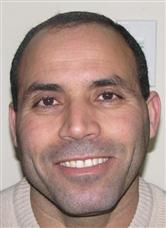
Click on the photo of Mohamed to see all items related to him. JUNE 2017: Mohamed Harkat once again faces deportation to his native Algeria after the Supreme Court of Canada declared the federal government’s security certificate regime constitutional.
This fight is not over. The Justice for Mohamed Harkat Committee will re-double its efforts to see that justice is done for Mohamed Harkat and that the odious security certificate system of injustice is abolished once and for all.