Mahjoub Bail Hearing Report: Trickle-Down Democracy, Part I
Four Years Behind Bars Without Charge or Bail: Secret Trials Continue in the Land of Trickle-Down Democracy
(A report on the week-long bail hearing for Mohammad Mahjoub, from the Campaign to Stop Secret Trials in Canada)
Like most capitalist nations, Canada is a land of trickle-down democracy. Those with wealth, power and, needless to say, that 'ole white skin privilege, enjoy the system's benefits the most. Those without that combination of fortune --usually bestowed by luck of birth -- are pretty much out of luck, relying on the odd crumbs of democratic justice which overflow the cups of the well-off.
As political leaders criss-cross this country talking about their vision of Canada, it is both unspoken and unacknowledged that a great many people in this country, specifically refugees and "non-status" immigrants, have no electoral say in decisions which very much affect their lives. Most of the so-called anti-terror provisions of Canadian law are currently aimed at a group of people who cannot "vote the rascals out" because they are still waiting, for years on end, for their citizenship papers.
And then there's five Muslim men, Canada's Secret Trial Five, now detained, without charge or bail on secret "evidence" neither they nor their lawyers are allowed to see, a collective 144 months.
During this election, it is unlikely that most journalists will ask about, nor that current Prime Minister Paul Martin -- he of the "no racial profiling in my Canada" bent -- will consider the fact that the most draconian of legal measures in Canada are currently directed almost exclusively at Canada's Arabic, Middle Eastern and Muslim communities.
Nor is it likely that Canada's Minister of Public Safety and Emergency Preparedness, Anne McLellan -- whose signature is needed to start the secret trial process -- will reflect on the volume of human damage which has been inflicted on these targetted individuals, their families, and their communities, where fear that anyone could be next is tangible.
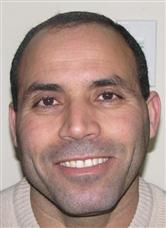
Yet if either had been in Federal Court this week in downtown Toronto, they might have had pause to consider the case of Canada's longest serving secret trial detainee, Mohammad Mahjoub, who this month marks four years behind bars without charge, held on the secret evidence of a much-discredited CSIS, Canada's spy agency.
How is it, they might have wondered, that Canadian democracy is to survive if we are able to lock people up without telling them why, and then initiate proceedings to deport them to countries where they are likely to face torture and worse, despite international agreements obligating Canada not to do so?
And how is it that, until today, two young children have been prevented for four full years from touching, embracing, kissing their dad? Over the noon-hour break this afternoon, Mahjoub's two youngest sons, aged four and six, were finally allowed a brief 15-minute contact visit with their father under the watchful eye of the RCMP.
That such a simple thing which most of us take for granted -- the human touch which consoles, the hug which affirms life and love -- can be denied so long, especially between a parent and children, spoke to the core of the cruel and unusual treatment of Mahjoub's four years behind bars. That such separation has been enforced based on secrecy is an indictment almost beyond words.
The visit of Mahjoub's children capped an emotionally draining week during which the conditions of Mahjoub's detention formed the heart of a constitutional challenge to his detention. Mahjoub is an Egyptian refugee and torture survivor who came to Canada on the last day of 1995. Accepted as a convention refugee in 1996, he was nailed with a CSIS secret trial security certificate in June, 2000. For four years, Mahjoub has been held without charge or bail, often in solitary confinement, on secret "evidence" neither he nor his lawyers have been allowed to see.
And now, in violation of Canada's commitment to the Convention Against Torture, the federal government is trying to deport Mahjoub to torture in Egypt, despite substantial likelihood that he will face prison, torture and worse.
The week began much as last June's hearing on the detention of secret trial detainee Hassan Almrei (currently entering his 32nd month of solitary confinement), featuring testimony from Peter Dietrich, an acting regional director for the Canadian Border Services Agency (CBSA, a new name for the old Citizenship and Immigration Canada, whose bureaucrats were no doubt stung by secret trial detainee Adil Charkaoui's description of them as "Inquisition" Canada)
Dietrich testified about how the federal government turns federal detainees over to the province of Ontario, after which they essentially lose touch with the conditions faced by these detainees.
"The care and welfare" of these individuals rests with the province, he explains. It's very nice language to describe indefinite detention faced not only by the five, but by increasing numbers of refugees who arrive in Canada without proper identification or who, for whatever unexplained reason, arouse suspicion amongst border security. The most recent numbers peg the average weekly detention figures of immigrants and refugees at 683.
Attorney Barbara Jackman asks him what preparations are made for long-term detainees, in terms of programs, ESL, anything other than dead time in a holding facility.
"We have no other arrangements in place," he says.
She asks if his office would be aware of whether federal detainees are in solitary confinement, if they contract AIDS or Hepatitis C, to which he replies "No," unless the province lets him know.
"Don't ya have someone to go in and see if they're OK?" she asks. He leaves that to the province.
Are you advised if a person is on hunger strike? she asks.
"Yes, we may be advised, but we may have heard it on the news, it depends on the profile," he says.
It's the first of numerous references to hunger strikes. What is frightening is the ease with which the term is referred to and acknowledged, an indication that conditions are often so trying that hunger strikes are fairly common in the detention system, a fact not known outside of their walls.
Jackman asks the same question of Dietrich she asked a year before: has anyone raised concerns about long term detainees, such as Mahjoub?
"Not that I'm aware of," is Dietrich's identical answer.
She asks if he has addressed these concerns since they came up at the Almrei hearing last June. He says the issue was "discussed," but he doesn't know what happened to it. Obviously, it wasn't much of a concern requiring follow-up!
Jackman asks him about a planned superjail for immigration detainees, and asks whether it will be set up for families too. Dietrich baldly sates, "CIC [Immigration] does not detain kids," something which would come as a surprise to the children often detained at the Heritage Inn (formerly Celebrity Inn), an ill-named prison in which babies and young children are often interned with their parents.
Then Mona El Fouli walks past the prisoner box where her husband sits and takes the stand. A dignified, eloquent woman, she discusses the effects of this long term detention on her family. She details problems she has had visiting the Metro West Detention Centre, noting she was denied visits when Mahjoub was in segregation, and on other occasions she would call ahead to arrange a visit, only to have it cancelled without explanation within 5 minutes of her arrival.
"I often wait a long time, and they refuse to let me in, even with the children there," she explains.
El Fouli must take public transit to get to the jail, which means she may not always be quite on time. One time a guard yelled at her that she was 3 minutes late and refused to let her in. Other guards have sworn at her, and when she does get in, finding a phone that actually works to talk to Mahjoub on the other side of the thick-plated glass takes up much of the 20 minute visit.
Recently, she was denied entry because she had taken part in a friendly demonstration with members of the Jaballah family (Jaballah is also detained at Metro West). She was told that she was trespassing, and would not be allowed in while the matter was being investigated, yet members of the Jaballah family were able to visit later that day and a friend of detainee Hassan Almrei got in the next, even though all were at the demo.
When Mona complained, the guard told her, "I'm just doing my job."
El Fouli describes the emotional strain on her children, particularly her 6-year-old boy, who suffers separation anxiety and often "will just sit and cry." She has to take her kids out early from school to make the visit, which concerns the school principal. This young boy worries about the rest of his family disappearing when he is at school, and he often complains of a stomach ache or headache because he wants, needs, to be with his mother, to know she is not disappearing too. "I'm afraid you'll never come back," he tells her.